
Why Your Dog Listens Inside but Ignores Commands Outside: A Guide for Tampa Bay Dog Owners

Updated: Oct 13
Your dog sits the first time you ask in the kitchen. Then you step outside, and the same cue seems to disappear. If that sounds familiar, you're not alone. It's one of the most common things Tampa Bay dog owners tell us, and it usually has nothing to do with a stubborn dog.
In this guide, we'll explain why dogs listen inside but tune out outside, and share practical ways to build focus that holds up on walks, at the park, and around the neighborhood.
Why Dogs Listen Inside but Ignore Commands Outside
Inside your home, there's very little competing for your dog's attention. Outside, everything changes: new smells, moving squirrels, other dogs, kids on bikes, cars, and noise. Your dog didn't forget the command. The environment simply got louder than you.
Here are the main reasons your dog may ignore you outside:
Distractions are stronger outside. Outdoor environments are full of things that pull your dog's focus away from you.
Your dog is over threshold. Every dog has a point where distractions become too much to process. Past that point, listening gets much harder.
Triggers are stacking up. Several distractions in a row can build on each other until your dog can't settle.
The command was never proofed. A cue learned in the living room has to be practiced in new places before it becomes reliable.
Understanding Distractions and Threshold
Your dog's threshold is the amount of stimulation they can handle while still thinking clearly. A dog may respond well when a squirrel is across the yard and stop responding entirely when it runs past a few feet away.
When a dog goes over threshold, you may see them:
Stop responding to familiar cues
Bark, lunge, or become anxious
Pull hard, try to chase, or try to get away
Good outdoor training keeps your dog working at a distance where they can still focus on you, then closes that distance over time.
What Trigger Stacking Looks Like
Trigger stacking happens when several stressful or exciting moments happen close together. Picture a calm walk where your dog sees another dog, hears a car door slam, and then passes a neighbor grilling, all within a minute. None of those alone might be a problem. Together, they can push your dog past the point of listening.
To help your dog handle trigger stacking:
Introduce distractions gradually
Start in quieter places before moving to busier ones
Give your dog a short break to reset when they start to get overwhelmed
Why Proofing Commands Matters
Proofing means practicing a cue in different places and situations until your dog responds the same way no matter what is happening around them. Many dogs learn "sit" or "come" indoors but never get enough practice outside, so they don't realize the same rules apply everywhere.
A simple way to start proofing:
Begin in a quiet outdoor spot, like your driveway or backyard.
Add distance and distraction a little at a time.
Clearly mark and reward the right response.
Practice in new locations every week.
Each new place teaches your dog that the cue means the same thing everywhere, which is how reliability is built.
How to Improve Recall and Focus Outside
Recall is one of the most important skills for safety. A few habits make a big difference:
Keep your dog on leash in open areas until their recall is dependable.
Practice recalls often in low-distraction areas first.
Make coming to you worth it every time with praise, play, or a reward your dog values.
Avoid calling your dog only to end the fun, like leaving the park or coming inside.
Increase distance and distraction slowly as your dog improves.
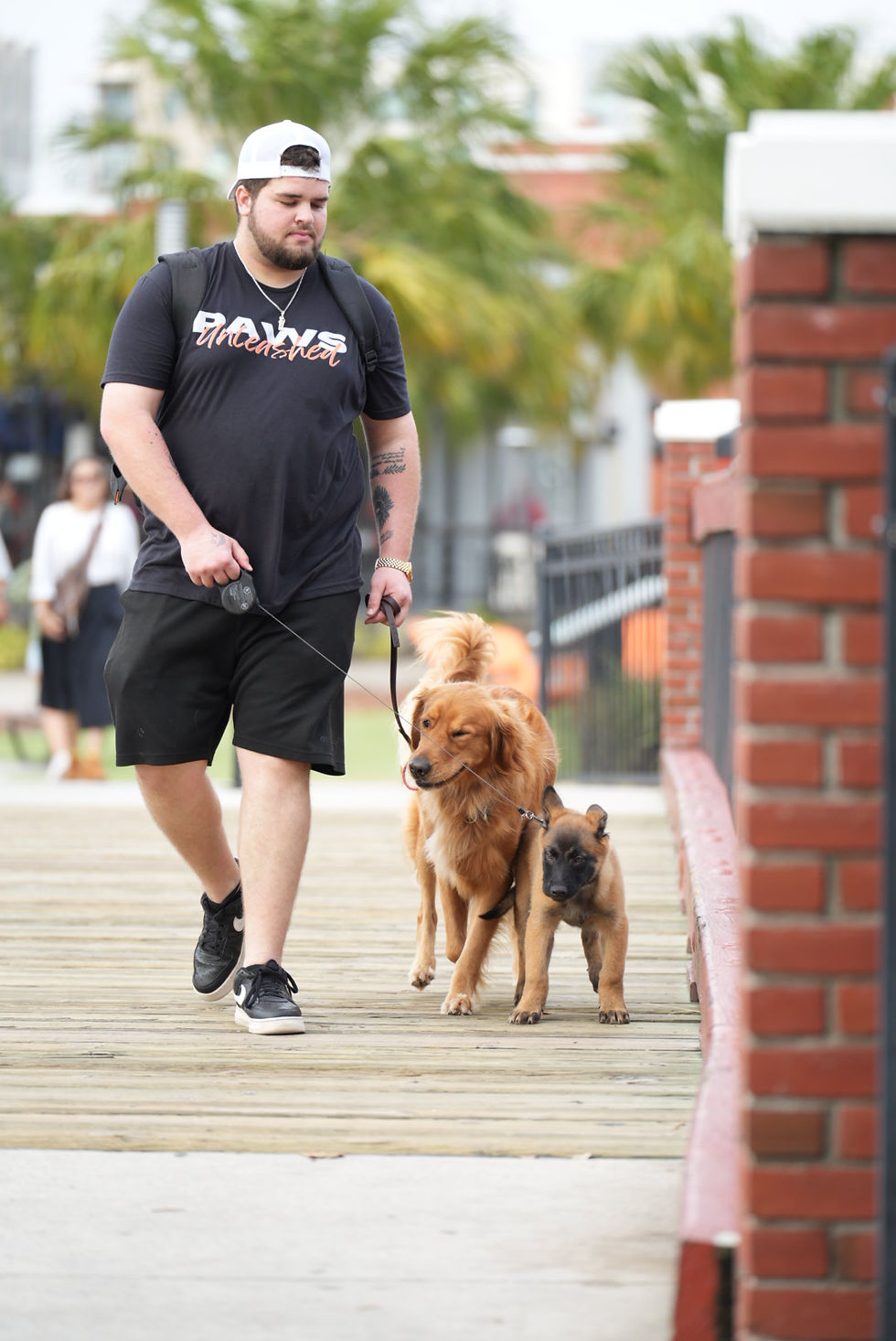
Consistency Is What Makes It Stick
Dogs read patterns. When cues change from person to person, or a rule applies inside but not on walks, your dog learns that listening is optional. Consistency at home and outside is what turns a known command into a reliable one.
Practice a few minutes every day in different settings.
Use the same clear, calm cue each time.
Follow through every time you ask for something.
Make sure everyone in the household uses the same rules.
When to Get Professional Help
If distractions, reactivity, or recall are still a struggle, a structured plan can help you and your dog move forward faster. At Paws Unleashed Academy, we train the dog and the owner together, so the progress holds up after training ends.
Private Lessons: One-on-one coaching in Apollo Beach and Riverview, ideal for focused work on recall, focus, and following through outside.
Day Training: Hands-on daytime training with your dog home with you each night.
Board & Train: Immersive, multi-week training for dogs that need concentrated structure and consistency.
Behavior Modification: Structured help for reactivity, fear-related behavior, aggression-related behavior, and impulse control.
Next Steps
Dogs that listen inside but ignore commands outside are usually dealing with distractions, threshold, trigger stacking, or a lack of proofing. Start by working at a distance your dog can handle, add distractions gradually, and practice in new places every week.
Want a plan built around your dog? Request a free consultation and tell us what's happening outside, what you've tried, and what you want walks with your dog to look like.


Comments